How to Choose a Tech Stack for Your Business
The wrong tech stack costs more to fix than your website cost to build. A plain-English guide to understanding, evaluating, and choosing the right technology for your business — without writing a single line of code.

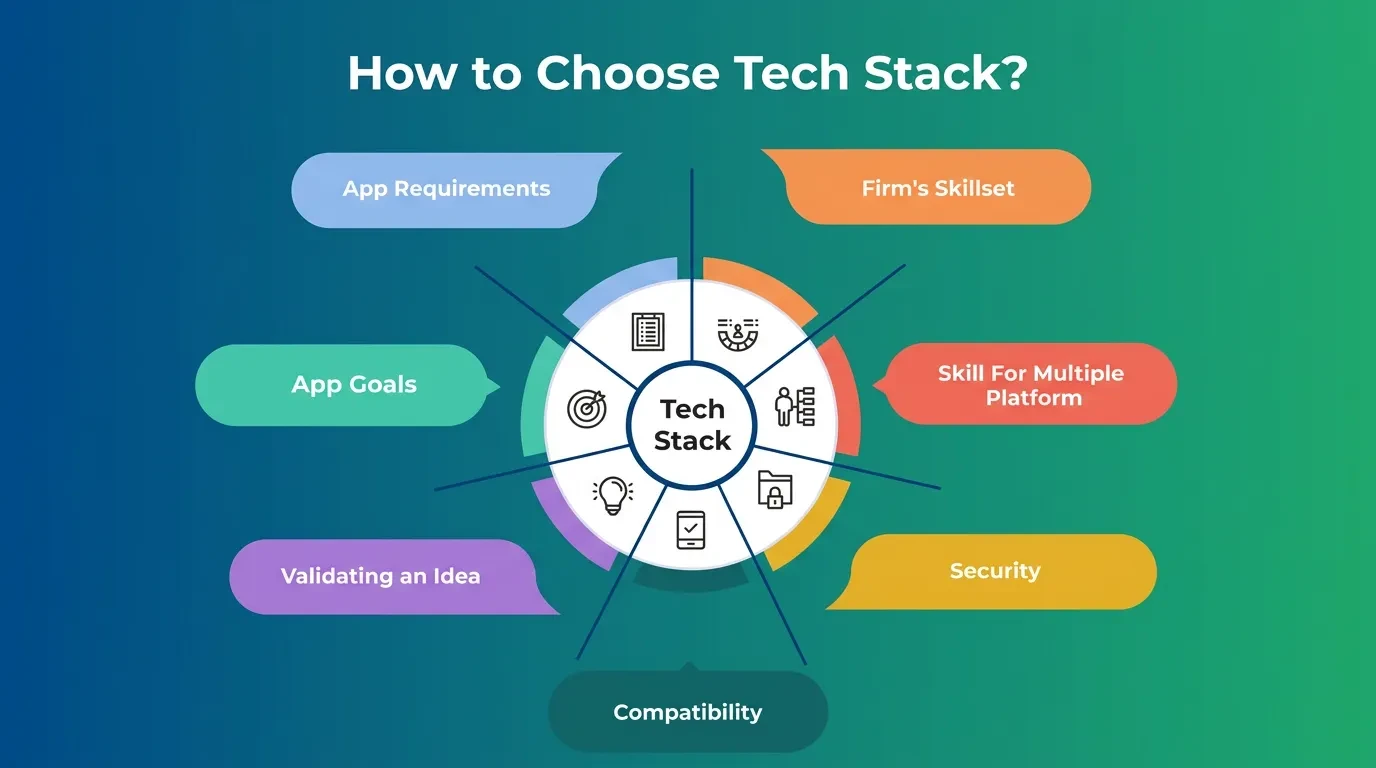
"What tech stack should I use for my startup?" is one of the most searched questions by founders building their first product. The problem is that every guide on how to choose a tech stack for your business is written for developers — not for the person writing the cheque. This article fixes that. You will learn what a tech stack actually is, why the choice affects your budget and hiring for years, and how to evaluate a developer's recommendation without writing a single line of code.
What a Tech Stack Actually Is (No Jargon)
A tech stack is the combination of programming languages, frameworks, and tools a developer uses to build your website or application. Think of it like the materials and construction methods for a building — you do not need to know how to lay bricks, but you should understand whether the architect is specifying steel or cardboard.
The Two Halves of Every Stack
The frontend is everything your visitor sees and interacts with. Buttons, forms, navigation, images, text layout — all of it. Common frontend technologies include React, Vue, and Angular. These frameworks determine how quickly your pages load, how they look on mobile, and how smooth the experience feels.
The backend is everything that happens behind the scenes. Storing customer data, processing orders, sending emails, connecting to payment providers. Common backend technologies include Node.js, Python, Ruby, and PHP. Your visitors never see the backend, but they feel it when something is slow or broken.
Between the two sits a database — where all your business data lives. PostgreSQL, MySQL, and MongoDB are the most common choices. The database determines how fast your site retrieves information and how safely your customer data is stored.
Why Developers Talk About "Stacks" Instead of Individual Tools
No single tool builds a complete product. A frontend framework needs a backend to communicate with, a backend needs a database to read from, and all of it needs a server to run on. Developers group these tools together because they need to work reliably as a system. A tech stack is a decision about how all the pieces fit together — not a choice about any individual tool in isolation.
Why Your Tech Stack Affects Your Budget, Hiring, and Growth
Non-technical founders often treat the tech stack as a developer's decision. That is a mistake. Your stack directly controls three things that shape your business trajectory.
Hiring and Replacement Costs
Popular stacks mean more available developers. According to the Stack Overflow 2025 Developer Survey, JavaScript and TypeScript remain the most widely used programming languages worldwide. A project built on a widely adopted stack like Next.js means you can find qualified developers faster, negotiate better rates, and replace a developer who leaves without rebuilding your product.
An obscure stack does the opposite. If only a few hundred developers in the world know your framework, every hire takes longer and costs more. If your lead developer quits, you may be stuck with a codebase nobody else can maintain.
Ongoing Costs Beyond the Build
The tech stack affects far more than the initial build price. Hosting, server resources, third-party tool licences, and maintenance hours all vary by stack. Open-source stacks like React, Python, and PostgreSQL carry no licence fees. Enterprise stacks like .NET can have licensing costs that compound annually.
The real cost of a tech stack shows up 12 months after launch — in maintenance, bug fixes, and the speed at which new features can be added. A well-chosen stack keeps those costs predictable. A poorly chosen one turns every small change into a project.
Scaling — What Happens When Traffic Grows
What happens when your site goes from 100 visitors a day to 10,000? The right stack handles that growth without a rebuild. The wrong one requires a partial or complete rewrite — often at the worst possible moment, when demand is rising and revenue depends on uptime.
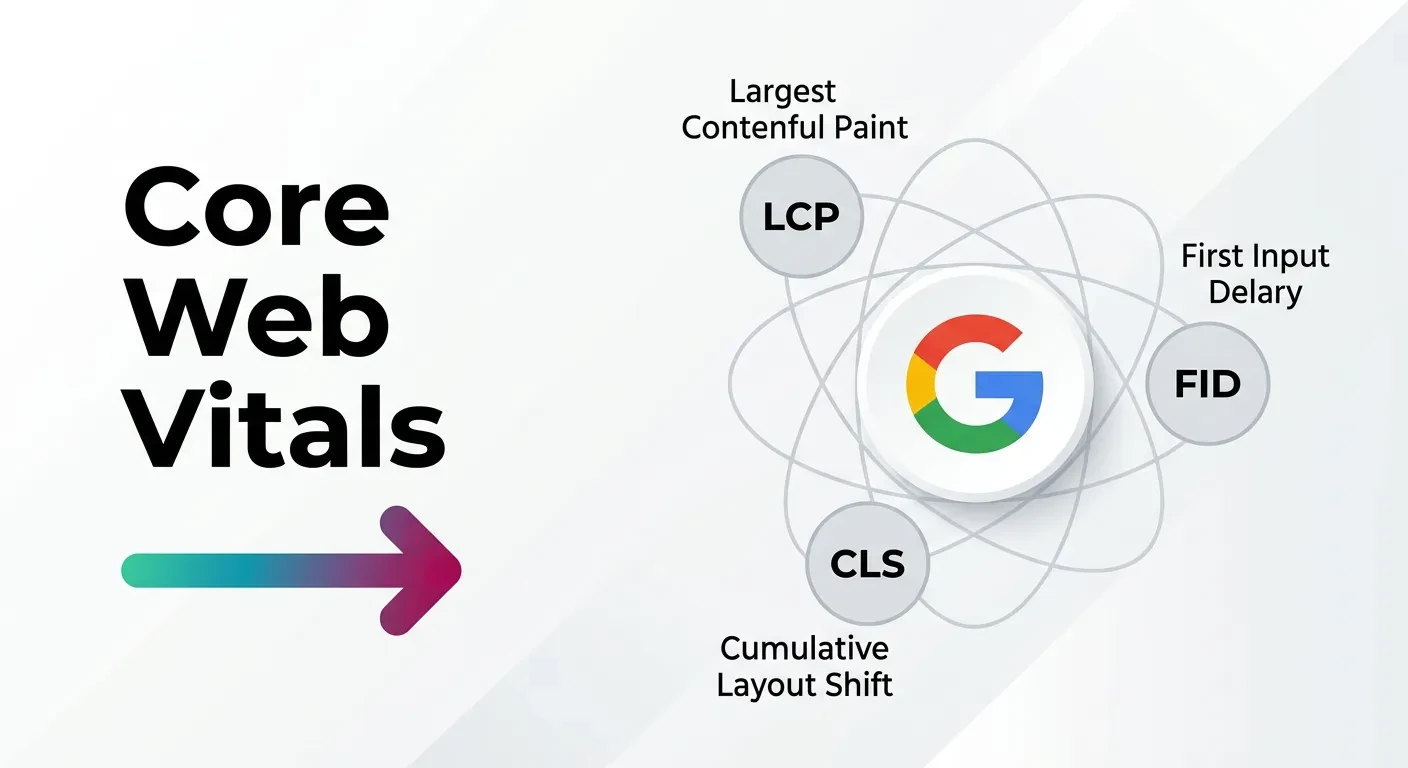
This does not mean you should over-engineer on day one. It means you should choose a stack with a clear path to scale when you need it, without paying for capacity you do not use yet. Google's web.dev performance guidelines outline exactly what "fast" means for modern websites — and the stack you choose determines how easily you meet those benchmarks.
How to Choose a Tech Stack: 5 Factors That Actually Matter
Framework comparison charts are everywhere. What founders actually need is a decision filter. When evaluating a tech stack for your business, five factors determine whether the choice will serve you long-term.
1. Your Business Type
Different businesses require different stacks. An e-commerce store has different needs than a SaaS platform, which has different needs than a content-driven marketing site.
- E-commerce: Needs reliable payment processing, inventory management, and fast product page loads. Next.js with a headless CMS handles this well.
- SaaS: Needs real-time data, user authentication, and API integrations. Full-stack TypeScript or Python with FastAPI works here.
- Content or marketing site: Needs strong SEO performance, fast load times, and easy content updates. Next.js with a CMS like Sanity or Contentful is the current standard.
2. Your Timeline to Launch
If you need to launch in 8 weeks, you cannot afford a stack that requires weeks of configuration. Ruby on Rails and Django are built for fast prototyping. Next.js with TypeScript is the default for teams that want speed without sacrificing long-term quality.
If you have 6 months, you have more room to customise. But more time is never a justification for a more complex stack. The fastest option that meets your requirements is almost always the right one.
3. Budget and Maintenance Cost
Ask your developer not just "how much will it cost to build?" but "how much will it cost to maintain for 2 years?" A stack that is cheap to build but expensive to maintain is not a saving — it is a deferred expense.
Open-source stacks cost less to maintain because talent is abundant and the tools are free. Proprietary or niche stacks often carry hidden costs: licensing fees, specialist developer rates, and longer debugging times when something breaks.
4. Developer Availability
Before agreeing to any stack, search for developers with that skill on freelance platforms or job boards. If a search for "Next.js developer" returns thousands of results and a search for the proposed stack returns dozens, that is a risk signal you should not ignore.
The best stack is one that your current developer knows well and that another developer could take over without a three-month onboarding period.
5. Long-Term Flexibility
Will you need a mobile app later? Integration with third-party tools? Expansion into new markets? The tech stack you choose now should not lock you into a single vendor, platform, or development approach.
Stacks built on widely adopted standards — JavaScript, TypeScript, Python, PostgreSQL — give you the most flexibility. Stacks built on proprietary frameworks or single-vendor platforms can trap you if that vendor changes direction or pricing.
The Tech Stacks That Work for Business Websites in 2026
You do not need to understand the code. You need to recognise whether a developer's recommendation matches your business situation. Here are the stacks that matter right now and what each one is best suited for.
Next.js + React — The Current Default
Best for: Most web businesses — e-commerce, SaaS, content sites, marketing sites.
Next.js is a framework built on React, the most widely used frontend library in the world. It handles both the frontend and backend in a single codebase, supports strong SEO performance out of the box, and benefits from the largest developer talent pool of any modern stack. If a developer recommends Next.js for your project, that is a safe, well-supported choice. It is what we build with at Vediwood because it gives clients the best balance of speed, performance, SEO, and long-term maintainability.
Python + Django or FastAPI
Best for: Data-heavy products, AI-powered features, rapid MVPs.
Python is the second most popular programming language in the world and the dominant language for machine learning and data science. Django provides an all-in-one framework for building web applications quickly. FastAPI is a newer, faster option for building high-performance APIs. If your product involves data processing, AI features, or complex back-end logic, Python is likely the right backend choice.
Ruby on Rails
Best for: SaaS MVPs where speed to market is the priority.
Rails was the framework behind early Shopify, GitHub, and Basecamp. It prioritises developer speed with conventions that reduce decision-making during development. The trade-off is performance at scale — Rails applications can slow down under heavy traffic, though this rarely matters at the MVP stage. If a developer recommends Rails for a quick prototype, that is a valid choice. If they recommend it for a high-traffic platform, ask why.
When You Should Not Build Custom at All
Not every business needs a custom tech stack. If you are launching a simple marketing site, a blog, or a basic online store, tools like Shopify, Webflow, or WordPress may serve you better and faster than a custom build.
Choose a custom tech stack when your requirements cannot be met by existing platforms. If Shopify does what you need, use Shopify. Custom development is an investment — make sure the problem justifies it.
How to Read a Developer's Tech Stack Proposal
Every competitor article tells you what stacks exist. None of them tell you how to evaluate what a developer is actually recommending. This section fills that gap.
3 Questions to Ask Any Developer
"Why this stack and not the alternatives?" A good developer explains their choice in business terms, not personal preference. "We recommend Next.js because it gives you better SEO performance and a larger talent pool for future hires" is a useful answer. "It is what we know best" is honest but incomplete — push for the business reasoning.
"What will it cost to maintain for 2 years after launch?" If the developer has not thought about this, they are thinking about the build, not your business. Hosting, security updates, and feature additions should all be estimated before the first line of code is written.
"If you left the project, how easily could another developer take over?" This reveals whether the stack is mainstream or niche, whether the code is well-structured, and whether the developer is building something sustainable — or something that depends on them personally.
Red Flags in a Tech Stack Proposal
A developer who says "we use a custom framework we built in-house" is creating a dependency. If they leave, nobody else can maintain the codebase without significant ramp-up time.
A recommendation based on "this is the newest and fastest technology" is a technical preference, not a business decision. New does not mean better. Fast for the developer does not mean fast for your business.
A dismissal of scaling — "we do not need to worry about that yet" — is a planning failure. You do not need to build for one million users on day one, but you need a credible path to get there. If the architecture cannot grow, you will pay to rebuild it later.
3 Tech Stack Mistakes That Cost Businesses Money
1. Choosing Based on Trends Instead of Requirements
A developer who recommends a stack because it is popular on Hacker News or Twitter is making a technical choice, not a business one. Your tech stack should be chosen because it solves your specific problem — your business type, your timeline, your budget, and your growth plan.
If you cannot explain why the stack was chosen in one sentence that references your business, the decision was not made for the right reasons.
2. Over-Engineering for Scale You Do Not Have
Building for one million users when you have 100 is not forward-thinking — it is waste. Microservices architecture, Kubernetes clusters, and complex distributed systems add cost, development time, and debugging complexity. Most businesses do not need them until revenue justifies the investment.
Start with a simple architecture. Scale when traffic demands it. Shopify started as a monolith. So did Facebook. The architecture you grow into matters more than the one you start with.
3. Getting Locked Into a Single Vendor
Some platforms make it easy to start but hard to leave. Proprietary CMS tools, drag-and-drop builders with non-standard code exports, and cloud services with custom APIs can all create vendor lock-in.
Before committing to any tool, ask: "What would it take to move to something else?" If the answer is "rebuild everything from scratch," that is not a choice — it is a dependency.
What to Do If You Are Choosing a Tech Stack Right Now
If you are at the point where this decision is on your desk, here is the honest path forward.
Start with your business requirements, not the technology. Write down what your product needs to do in the first 6 months — the features, the integrations, the user experience. Show that list to any developer who proposes a stack and ask them to explain how their recommendation serves each requirement specifically.
If you want a web project built by someone who explains every technical decision in plain language — the stack, the architecture, the trade-offs, the costs — here is how Vediwood approaches a web project. No jargon, no black boxes. Just a clear answer to what your business needs and why.
Follow Us
Most founders read us once and change something that week.
Every issue covers one thing that makes your website work harder — better conversion, stronger SEO, or smarter design. No fluff, no agency speak. Just the decision you need to make this week.
Our Team

Sadiki Said
Full Stack Developer

Nezha Essyed
Content Strategist