Entity SEO for Small Business: Win the AI Search Era
Search engines and AI assistants now rank the things they trust, not the pages stuffed with keywords — and most small businesses are invisible to them. This is the plain-English guide to entity SEO: how to make Google recognise your business without publishing endless content.

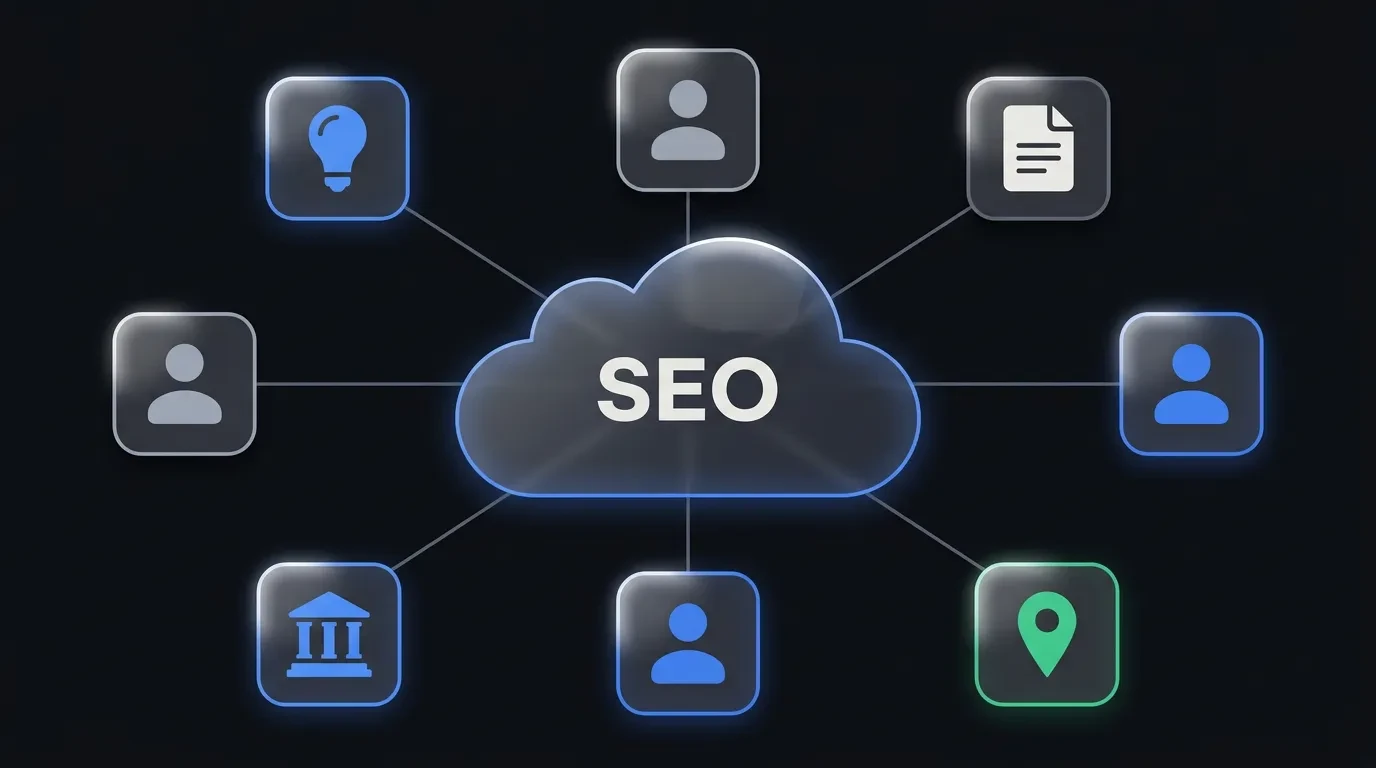
You don't have time to publish a blog post every week, and you've started to suspect it isn't even working. Here's the good news: entity SEO is how a small business can rank without churning out more content. Instead of competing on volume, you make Google — and the AI tools people now ask instead of Google — recognise your business as a real, trusted thing. That recognition is what earns rankings and citations in 2026. This is how you build it.
Yes, Entity SEO Can Help You Rank Without More Content
Start with the question keeping you up at night: can a small business rank without producing endless content? Yes — and entity SEO is the reason volume stopped being the winning move.
Google no longer rewards the site with the most pages on a topic. It rewards the business it can identify and trust as a real, specific thing. That single shift moves your effort from quantity to clarity.
Clarity is where a small team wins. You can't out-publish a content farm, but you can be the most clearly defined, most verifiable business in your niche. That is a fight you can actually win.
What an Entity Actually Is (and Why Google Stopped Caring About Keywords)
An entity is any distinct thing Google can identify and tell apart from every other thing — a business, a person, a product, a place. A keyword is just text. An entity has an identity.
The classic example is the word “Apple.” As a keyword it’s ambiguous; as an entity, Google knows whether you mean the fruit or the company in Cupertino. It knows because of the relationships and signals attached to each one.
Google made this shift official in 2012, when it introduced the Knowledge Graph and described the change as a move toward things, not strings (Google, 2012). At launch it already mapped 500 million people, places, and things, plus 3.5 billion facts about how they connect.
For your business, becoming an entity means Google stops guessing. It knows what you do, where you do it, and who is behind it. Once it knows, it can serve you as the answer with confidence instead of hedging.
This is the practical break from old keyword SEO. You used to write a page targeting “handmade leather wallets” and repeat the phrase. Now you make Google understand that your business is a maker of handmade leather goods — and you start ranking for queries you never wrote a page for.
Why Entity SEO Matters More in 2026 Than It Did Two Years Ago
Two years ago, entity SEO was a nice-to-have. Now it’s the difference between being recommended and being invisible.
The reason is AI search. When someone asks ChatGPT, Perplexity, or Google’s AI Overviews for “the best [your service] near me,” the system isn’t matching keywords. It’s picking entities it recognises and trusts enough to put its name behind.
If Google can’t confidently identify your business, an AI assistant won’t either. It will recommend a competitor it does understand, even when your work is better. Recognition has become a prerequisite for being cited at all.
This is also why churning out more blog posts has stopped working. Ten thin articles from a business Google can’t place will lose to one clear, well-connected entity every time. The volume game rewards the platforms that already won it — not a small business with a small team.
How to Build Your Business Into an Entity Google Trusts
Building your entity is a handful of deliberate moves, not a content treadmill. Here is the order I’d run them in for a small e-commerce or service business.
Give your business one entity home
Pick one page that is the definitive source about who you are — usually your homepage or your About page. This is your entity home, the reference point everything else corroborates.
State the facts plainly: your exact business name, what you sell, where you operate, and who founded it. Don’t scatter three different versions of your name across the site. Pick one official name and use it everywhere.
Then make every other page support that page rather than compete with it. A product page should point back to the entity home; the entity home should make sense of every product. That internal consistency is the first signal Google reads.
Mark it up so machines can read it
Schema markup is how you hand Google your facts in a format it can’t misread. Use Organization schema — or LocalBusiness if you serve a physical area — on your entity home, following Google’s structured data guidelines.
The property that matters most for entities is sameAs. It lets you list every other place that represents you: your LinkedIn, your social profiles, your Wikidata entry, your directory listings. Schema.org defines sameAs as exactly this — a reference that unambiguously identifies the thing.
In plain terms, sameAs tells Google “all of these profiles are the same business — me.” That’s how it connects your scattered presence into one entity. Schema won’t rank you on its own, but it removes the guesswork that holds recognition back.
Claim the profiles Google already trusts
Google builds its understanding from sources it already trusts, so go to them directly. A complete Google Business Profile is the single highest-leverage move for most small businesses — it creates an entity entry inside Google’s own ecosystem.
Then add a Wikidata item, a Crunchbase profile if you qualify, and listings in the few directories that actually matter in your industry. Fill them out completely, not halfway.
Keep the name, address, and core details identical across all of them. Inconsistency is the fastest way to confuse the entity you’re trying to build. One wrong phone number format does more damage than a missing listing.
Go deep on one topic, not wide on ten
This is where the “without more content” promise gets honest. You still need content — but depth beats volume, and depth is the part a small team can actually deliver.
Cover one subject thoroughly and Google reads you as an authority on that thing. We’ve watched a single, genuinely complete guide outperform a dozen shallow posts for a media client, because it made the site’s expertise unmistakable.
Pick the topic you know best. Then write the most useful thing on the internet about it — once — instead of ten forgettable posts that dilute what you’re known for.
Get mentioned alongside the right things
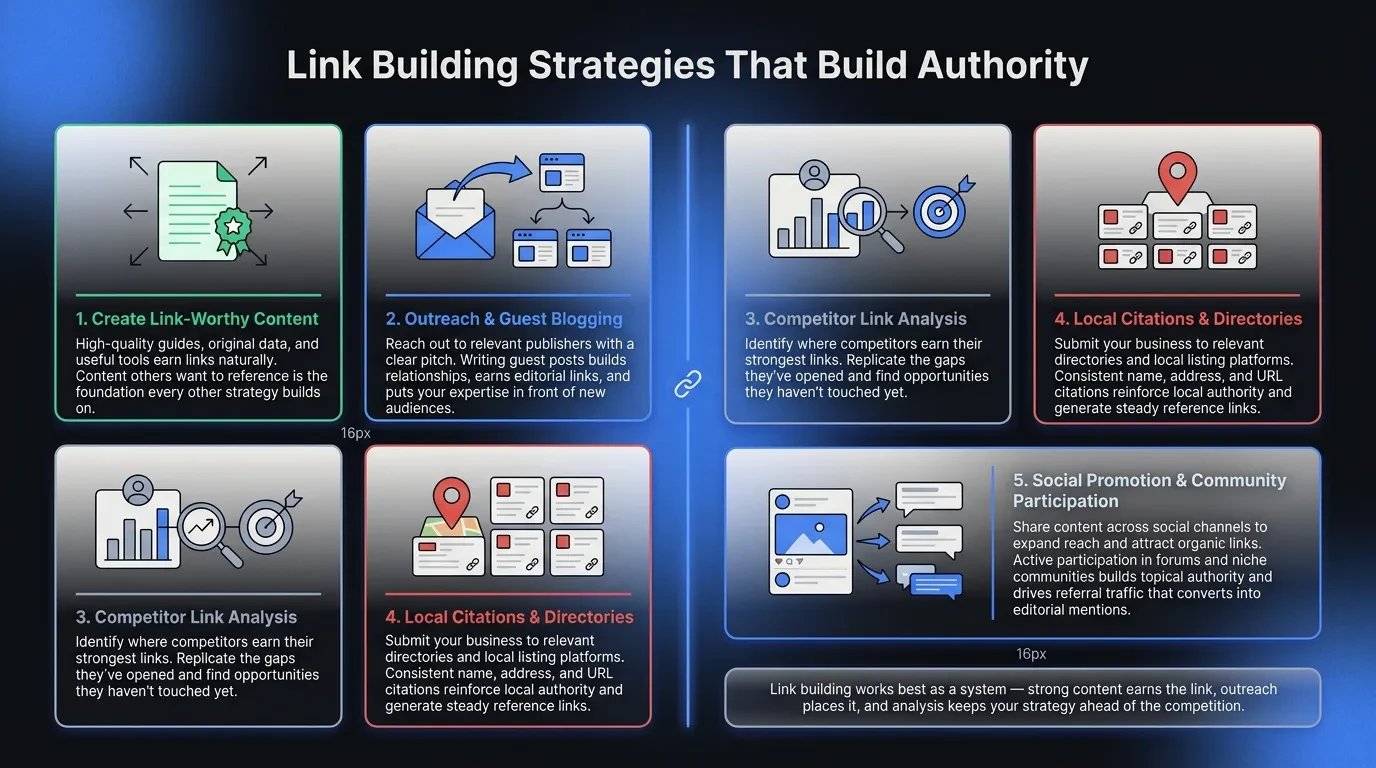
When a local paper or an industry site mentions your business next to your city, your field, and your competitors, Google takes note — even with no link attached. These co-citations strengthen where you sit on its map of the market.
So pursue real mentions: press, podcasts, community events, supplier and partner pages. A mention from a source Google trusts often does more for your entity than a backlink. It corroborates that you exist, that you’re relevant, and that real people refer to you.
How Long It Takes, and Whether You Need a Wikipedia Page
The honest answer on timing: entity SEO compounds, it doesn’t switch on. Google needs to see consistent signals across several sources before it firmly recognises you, which usually takes a few months for a newer business.
No, you don’t need a Wikipedia page. It helps, but Google draws entity data from your Business Profile, your schema, Wikidata, and trusted directories — more than enough for most small businesses to be recognised.
And the cost is mostly time, not money. The work is setup and consistency, not a retainer. That’s exactly why it suits a small business better than an expensive content or link-building program.
How to Tell If It’s Working
You don’t have to guess whether any of this is landing. Search your exact business name in Google and watch what comes back.
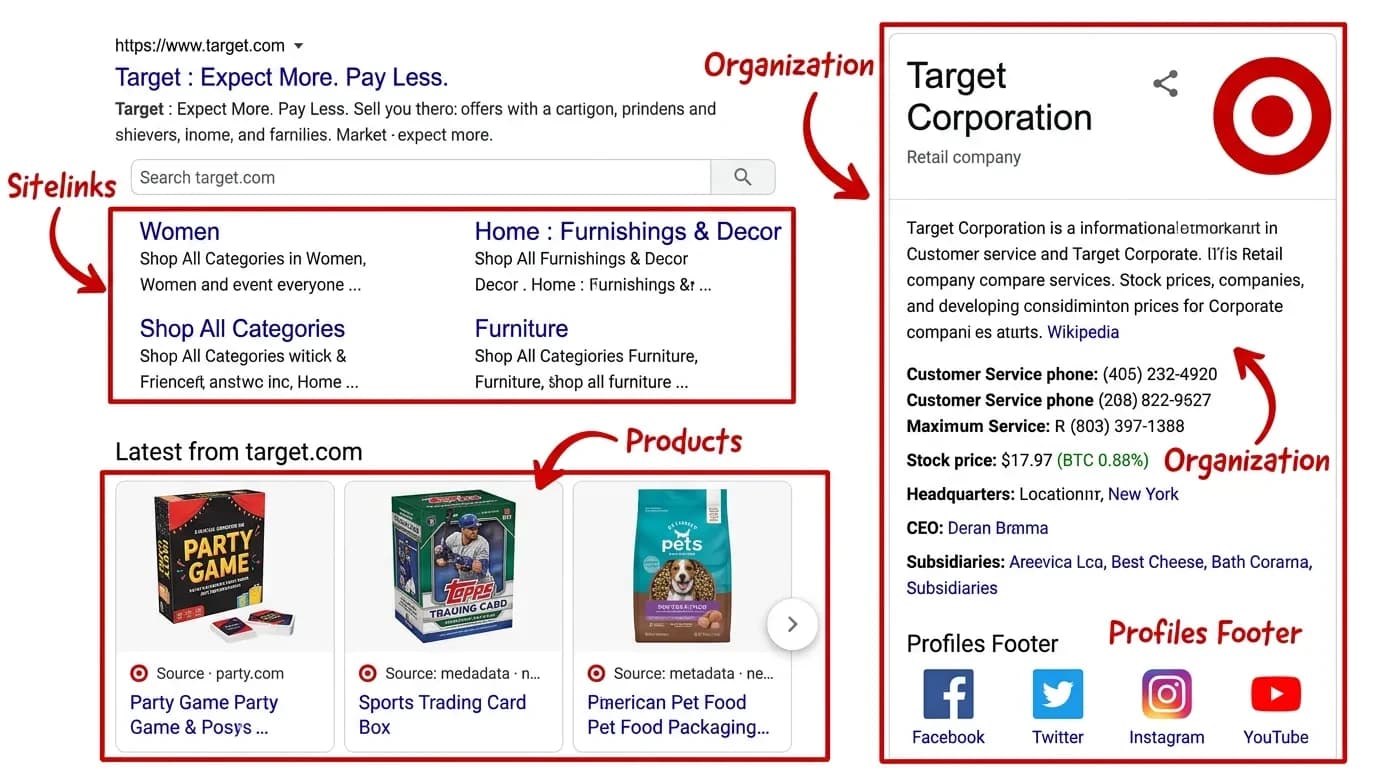
If a Knowledge Panel appears on the right side of the results, Google recognises you as an entity. If nothing appears, your signals still need work — usually more consistency or a missing trusted profile.
For a deeper check, study your brand SERP — everything that shows when someone searches your name — and query the Google Knowledge Graph API to see whether you’ve been assigned an entity ID. Review these every quarter, not every day. Entity recognition moves slowly, and watching it daily only tempts you to fiddle with signals that need time to settle.
Where to Take This Next
Entity SEO rewards the businesses that make themselves easy to understand — which, for once, favours the small and focused over the large and noisy. You don’t need scale. You need to be unmistakable.
If you want the bigger picture of how this fits into ranking and getting cited across AI search, the next step is our complete guide to answer engine optimization. Start there, map your own entity signals against it, and close the gaps one at a time.
Follow Us
Most founders read us once and change something that week.
Every issue covers one thing that makes your website work harder — better conversion, stronger SEO, or smarter design. No fluff, no agency speak. Just the decision you need to make this week.
Our Team

Sadiki Said
Full Stack Developer

Nezha Essyed
Content Strategist