AI Website Builder for Small Business: An Honest Take
An AI website builder can put your business online in minutes — but for some businesses, that fast, cheap site quietly costs you customers. This is the honest guide to when AI builders are enough, when you need a designer, and how to decide.
Yes — an AI website builder can build your small business website, and for plenty of businesses it's the right call. But "it built a website" and "it built the right website for your business" are two very different sentences. Every page you'll find ranking for this question is published by a company that profits when you say yes. We build websites for a living and don't sell an AI builder — so here's the honest version: when these tools genuinely work, when they quietly cost you, and how to decide.
Can an AI Website Builder Build Your Small Business Website?
The honest answer is yes — with a condition. AI website builders are genuinely good at turning a few sentences about what you do into a clean, mobile-friendly, five-page business site. If your goal is a professional online presence — who you are, what you offer, how to reach you — a 2026 builder gets you most of the way in an afternoon.
Where it gets complicated is the word "enough." A site that looks finished is not the same as a site that ranks, converts, and holds up as your business grows. The builder solves the launch. It does not solve the business problem behind the launch.
That distinction is the whole decision, and it's the part the tool reviews skip past. So before you pick a platform, get clear on which kind of website your business actually needs.
What AI Website Builders Do Genuinely Well in 2026
Let's be fair to the tools — they've come a long way. The 2022 era of generic, obviously-AI templates is over, and today's builders produce sites most visitors can't tell were generated by software.
Here's where they earn their keep:
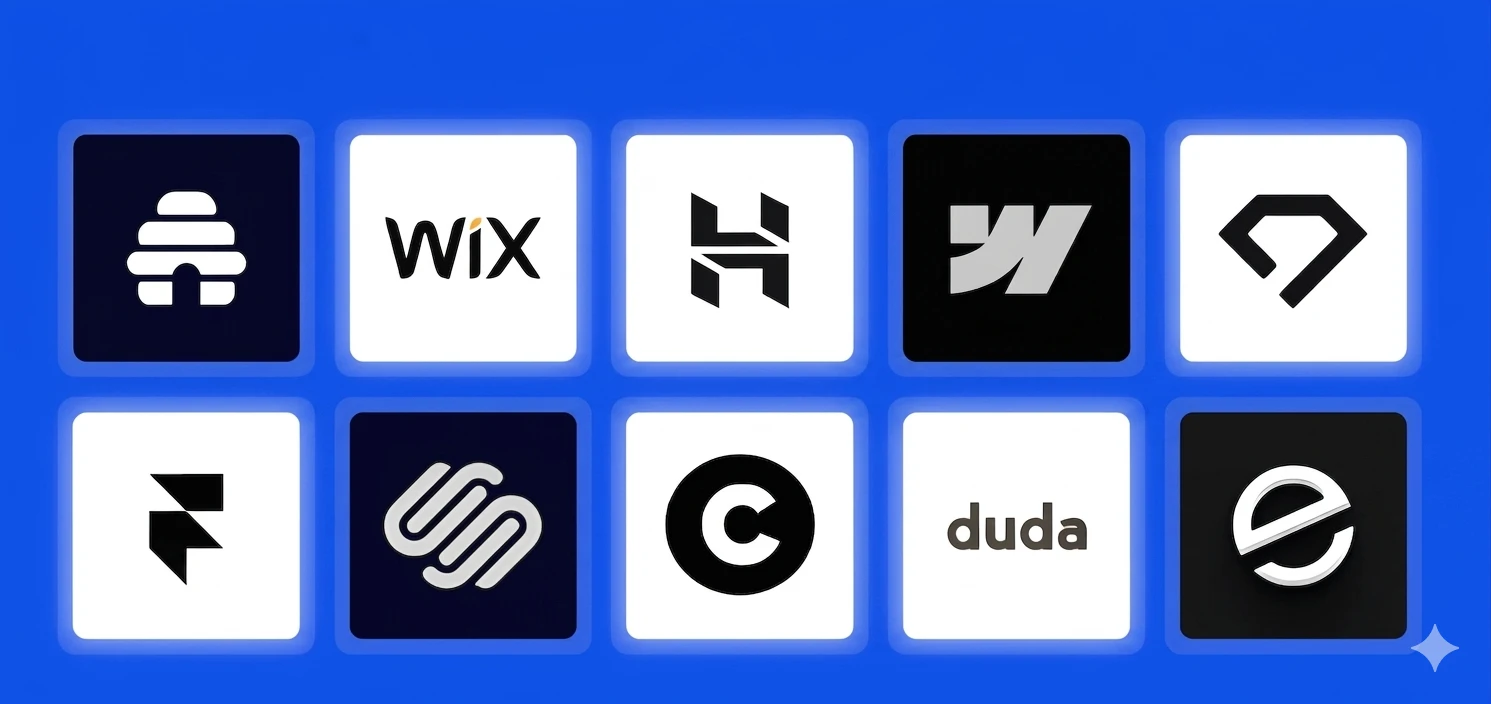
- Speed. Describe your business in plain English and you'll have a live draft in under a minute on tools like Wix, Hostinger, or Durable.
- Cost. Ten to twenty dollars a month covers hosting, a domain, and editing — a fraction of a custom build.
- No technical skill needed. You edit by typing what you want changed, not by learning a design tool.
- A sensible starting structure. Most builders hand you a homepage, services, about, and contact layout that follows proven patterns.
Adoption backs this up. According to the U.S. Small Business Administration, 8.8% of U.S. small businesses were using AI in production by August 2025 — up from 6.3% just six months earlier (SBA Office of Advocacy, 2025).
For a solo consultant, a local trade, or a new business testing an idea, that speed-to-live is a real advantage, not a compromise. The trouble starts when a business with more at stake assumes "fast and cheap" also means "enough."
Where AI Website Builders Fall Short (the Part Vendors Skip)
Every limitation below is fixable — but usually not inside the builder, and not without the skills the builder promised you wouldn't need. These are the gaps we get hired to repair after an AI site stalls.
SEO that goes past the homepage
AI builders set up the basics: page titles, meta descriptions, a sitemap. What they don't do is the work that actually wins rankings — topic depth, a real internal-linking plan, and the technical performance Google rewards.
Google ties rankings to page experience signals like Core Web Vitals, its loading and stability metrics (Google Search Central). AI-generated sites often load heavy and score poorly here, and the builder won't flag it. Ranking is a strategy problem, and an AI builder ships you a template, not a strategy.
Accessibility and legal exposure
This is the one almost no tool review mentions. U.S. web-accessibility lawsuits keep climbing, and the Department of Justice has been clear that the Americans with Disabilities Act applies to websites (ADA.gov).
Most AI-generated sites fail basic accessibility checks — poor color contrast, missing image alt text, unlabeled form fields. For a small business, that's both lost customers and real legal risk. A designer builds accessibility in from the start; a builder leaves it to chance.
Anything genuinely custom
This is the wall small business owners hit constantly. As one put it on Reddit: AI builders are "fine for a basic landing page, but the second you want anything custom you're back to doing it yourself anyway."
A booking flow, a member area, a non-standard checkout, an integration with your CRM — AI builders either can't do these or do them badly. The further your business is from a simple brochure, the faster you outgrow the tool.
Ownership and lock-in
Most AI builders won't let you export clean code or move your site elsewhere. You're renting, and your site lives and dies inside that one platform. If the pricing jumps or the tool shuts down, you start over — and your search ranking history goes with it.
AI Website Builder vs Web Designer: How to Actually Decide
Forget the tool comparisons for a minute. The real question isn't which builder — it's whether your business needs a builder at all. Use the split below.
Use an AI website builder if:
- You're a solo operator, freelancer, or local service business
- You need a simple, informational site of roughly five to eight pages
- You're testing an idea and want to be live this week
- Budget is tight and the site isn't your main sales channel yet
Hire a web designer if:
- Your website is how you actually win customers
- You need custom functionality — booking, accounts, integrations, a real store
- Search ranking matters to how you grow
- Brand perception affects whether people trust you with their money
- You can't afford accessibility or performance to be an afterthought
Here's a test that cuts through it: if your website going down for a week would cost you real revenue, you're past the point where "good enough" is good enough. That's the line between a tool and a partner.
Plenty of businesses start on a builder and move to a custom site when the stakes rise. That's a smart path, not a failure — as long as you make the move deliberately, before the cheap site quietly starts costing you more than it saves.
How to Build a Website With AI Without Regretting It Later
If the split above points you toward a builder, do it well. The difference between an AI site that works and one you rebuild in six months is almost entirely in the setup.
- Write your content first. The AI is only as good as what you feed it. Get clear on what you do and who you serve before you touch a tool.
- Pick for your real need, not the demo. Wix or Squarespace for design, Shopify for selling, Durable or Hostinger for raw speed. Match the tool to the job.
- Fix what the AI ignores. Rewrite the generic copy, add real photos, check every page on a phone, and set proper page titles.
- Run an accessibility and speed check. Use a free tool to catch contrast, alt-text, and load-time problems before you launch — not after a customer or a lawyer finds them.
- Use your own domain. Never build your business on a platform subdomain. It hurts trust, and you can't take it with you.
- Plan your exit. Confirm whether you can export your content before you come to depend on the tool.
Do these six things and you get the real value of AI — speed — without inheriting the parts that quietly cost you later.
The Real Cost: When Cheap Becomes Expensive
The twelve-dollars-a-month price tag is the headline, not the full bill. Read the tool reviews closely and the same pattern shows up: the advertised price rarely includes the domain, contact forms, analytics, or the features you actually need to run a business.
But the bigger cost is the one that never shows on the invoice. A site that doesn't rank, doesn't convert, or turns away customers with poor accessibility loses you money every month it's live. A cheap site that doesn't work is the most expensive site there is.
This is exactly why "what's the best AI website builder for small business" is the wrong first question. The right one is "what does my business actually need this website to do?" Answer that honestly, and the build choice usually gets obvious.
Deciding Between AI and a Custom Build?
If you've read this far, you're probably weighing a fast AI site against building it properly — and you want a straight answer, not a sales pitch. That's a call we're glad to have.
See how we approach a web project, and what a site built to actually grow your business looks like, here: Vediwood's web design and development services. No pressure — just an honest read on whether AI is enough for where you're headed, or whether it's time for something built to last.
Follow Us
Most founders read us once and change something that week.
Every issue covers one thing that makes your website work harder — better conversion, stronger SEO, or smarter design. No fluff, no agency speak. Just the decision you need to make this week.
Our Team

Sadiki Said
Full Stack Developer

Nezha Essyed
Content Strategist